
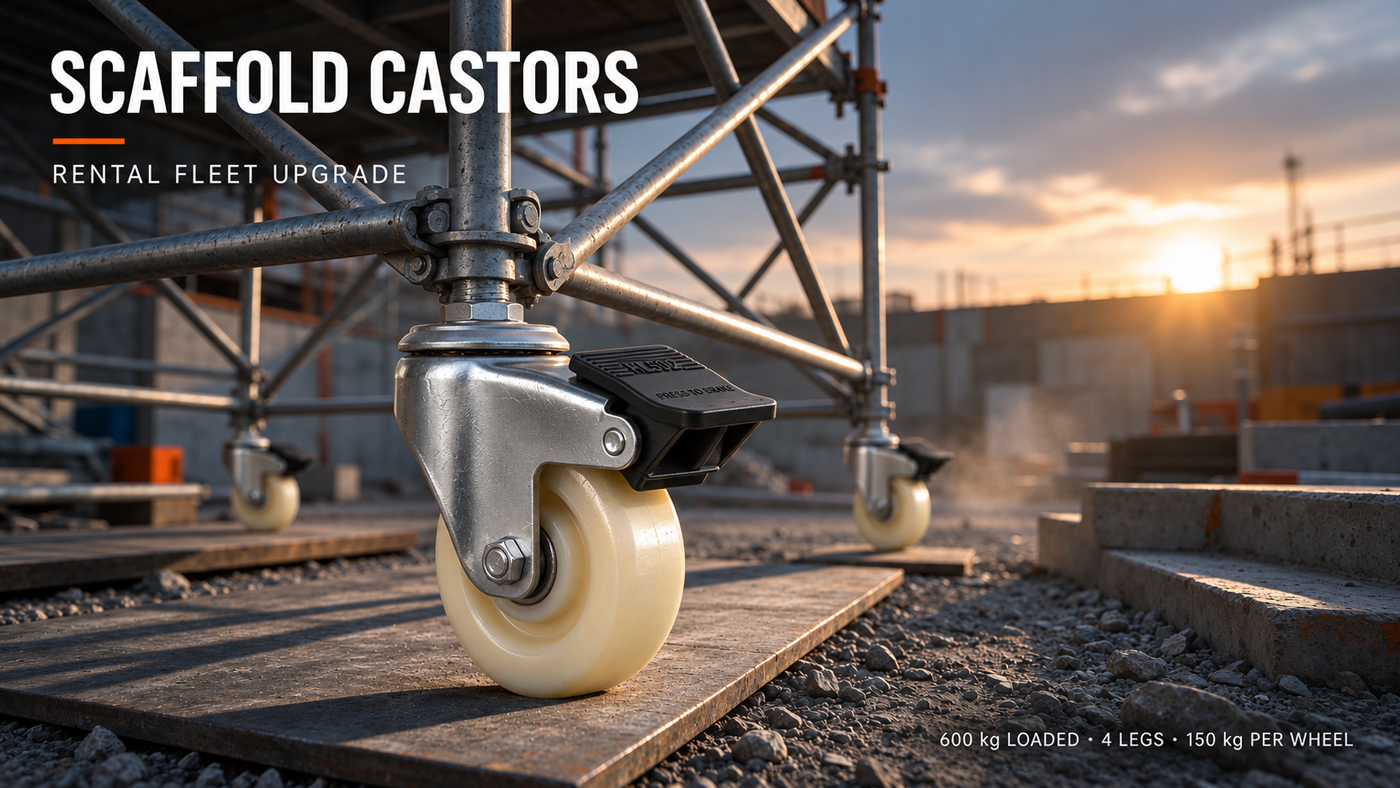
A mobile scaffold or platform truck that rolls out clean on the depot yard comes back from site with chipped treads, a wheel that will not turn, and a brake that no longer holds. Rental fleets feel this twice: once in maintenance cost, and once in the next customer who rents a machine that will not move.
This account follows how a construction and scaffolding rental fleet worked through that wear pattern — what was actually failing, what was changed, and what the before/after looks like for a buyer comparing scaffold casters or scaffolding wheels. The scene is representative of the outdoor equipment programs we quote; no client name, audit figure or warranty claim is attached.
The Problem in Numbers
The fleet ran mobile scaffolding and material platform trucks between the depot and active sites. A typical loaded platform carried roughly 600 kg of frame, boards and tools on four legs. Before the upgrade, the maintenance log showed the same symptoms across the yard:
- Several wheels per month were pulled with chunks broken out of the tread edge or cracked around the bore.
- After standing outdoors a few days, a wheel would drag or seize, and the operator pushed harder rather than let the truck roll.
- Brakes held in the depot but softened their grip after exposure to sun, rain and yard grit, so parked units could shift on a slope.
- Crossing temporary steel plates, kerbs and loose gravel sent impact straight into the bracket and the tread.
These are the symptoms. The root cause was not that the wheels were cheap. It was that a light indoor wheel was being asked to do an outdoor rough-duty job.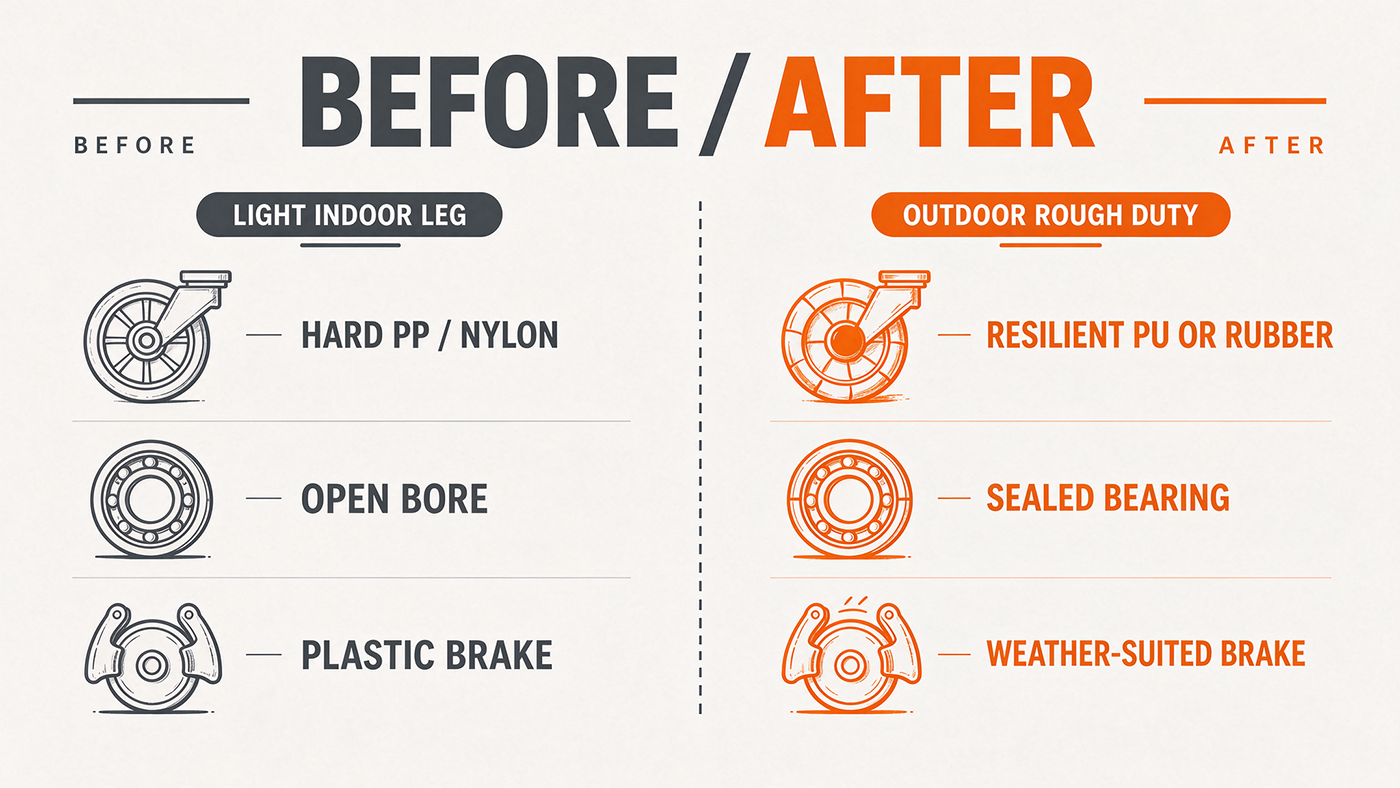
Why the Original Castors Failed
The original legs were light-duty hard PP or nylon wheels on a plain bore or nylon bushing, with a plastic brake. That combination suits a dry, smooth, indoor cart. On a construction yard it lost on three points:
- Hard tread on rough ground. A stiff plastic tread against gravel, plate edges and kerb drops does not absorb impact. The edge chips, and once a chip starts it grows into a crack around the bore.
- Open bore against dust and moisture. A plain bore or bushing has no seal to keep yard grit and rain out. The bore dries and drags after a wet spell; that is the stiff start-up operators felt.
- Small diameter and light bracket. A small wheel drops into gaps and rides over seams hard. The thin bracket flexes under the corner load, the swivel develops play, and the plastic brake disc loses grip after outdoor exposure.
A bigger hard wheel with a better bearing would have bought some time. But on loose gravel and uneven ground the tread material itself still had to match the surface, and the brake and bracket had to hold up to weather.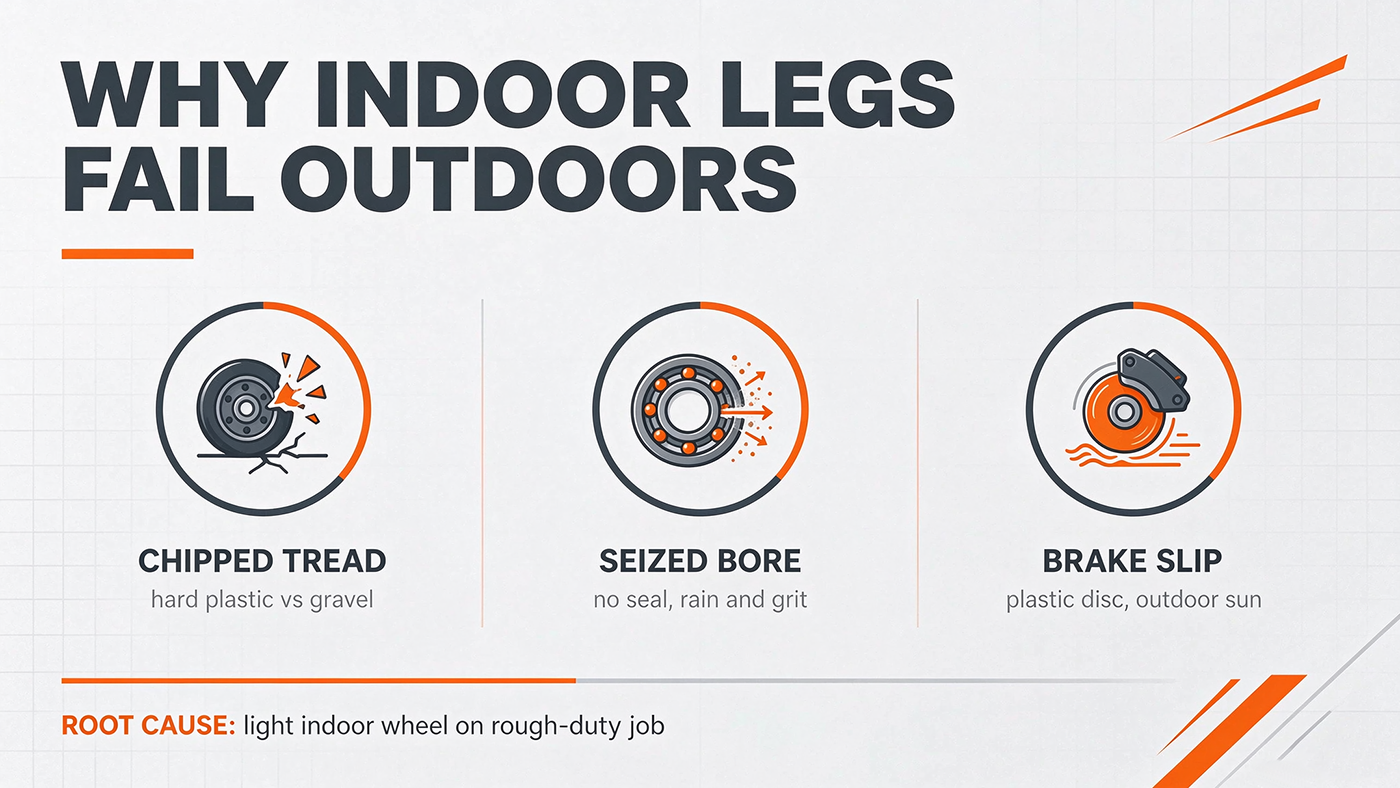
What We Changed
The replacement was spec’d around four decisions, each tied to one of the failure points:
- Tread matched to the ground. Units running on hard, compacted yards took a resilient polyurethane or rubber tread that rolls over seams without chipping. Units crossing loose gravel and soft ground took an air-filled or high-elasticity tread that absorbs the uneven surface. The tread was not chosen by price first.
- Sealed rolling bearing instead of an open bore. A ball or roller bearing with sealed grease keeps grit and rain out, so the leg still turns after standing outdoors. This addresses the stiff start-up rather than masking it with a harder push.
- Larger diameter for the obstacles. A bigger wheel rides over plate edges, joints and small drops instead of dropping into them. The mounting on the existing frame was checked first, so the diameter change stayed within the frame’s allowed fit.
- Weather-suited brake and bracket. Where the truck parks on a slope, the brake hardware was selected for outdoor exposure rather than a standard indoor plastic pedal. The bracket was sized to the corner load and given a finish that resists yard moisture.
For a platform loaded around 600 kg on four wheels, the per-wheel figure is 600 ÷ 4 = 150 kg at ambient. An overhanging load or an uneven yard can put more on one corner, so the rating is set at the worst corner, not the divided average. Where the ground carries the truck over rough surfaces, the bearing and bracket matter as much as the tread.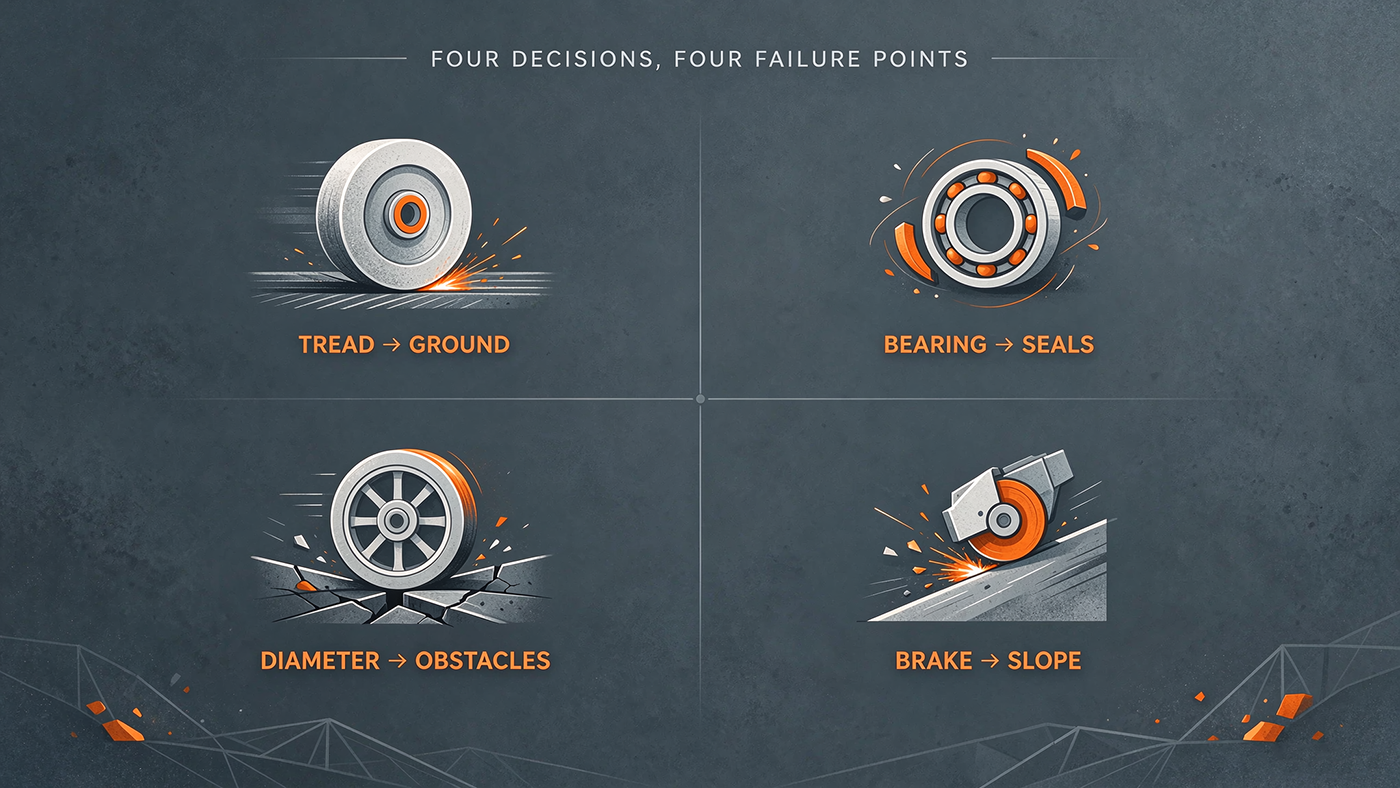
Before / After, at a Glance
| Point | Original spec (light indoor leg) | Replacement direction (outdoor rough duty) |
|---|---|---|
| Tread material | Hard PP or nylon, chips on gravel and plate edges | Resilient PU/rubber on hard yards; air-filled or elastic tread on loose ground |
| Bearing | Plain bore or nylon bushing, open to dust and rain | Sealed ball or roller bearing, grease retained against grit |
| Wheel diameter | Small, drops into gaps and rides seams hard | Larger diameter within frame fit, clears plates and joints |
| Brake | Plastic pedal/disc, loses grip after outdoor exposure | Brake hardware selected for the parking condition and weather |
| Bracket and finish | Light gauge, develops play, streaks with moisture | Bracket sized to corner load, finish suited to yard damp |
| Ground behaviour | Bounces over rough surface, transmits impact to load | Absorbs uneven ground, steadier roll over seams |
| Wear rhythm | Chipping and seizing within the rental cycle | Expected to extend service interval; wear confirmed on trial route |
No guaranteed lifetime figure is put on the tread for this route. Yard grit, loading habits and weather vary site to site. The direction is the point: each failure mode above was tied to one specific change, not to a generic heavier wheel.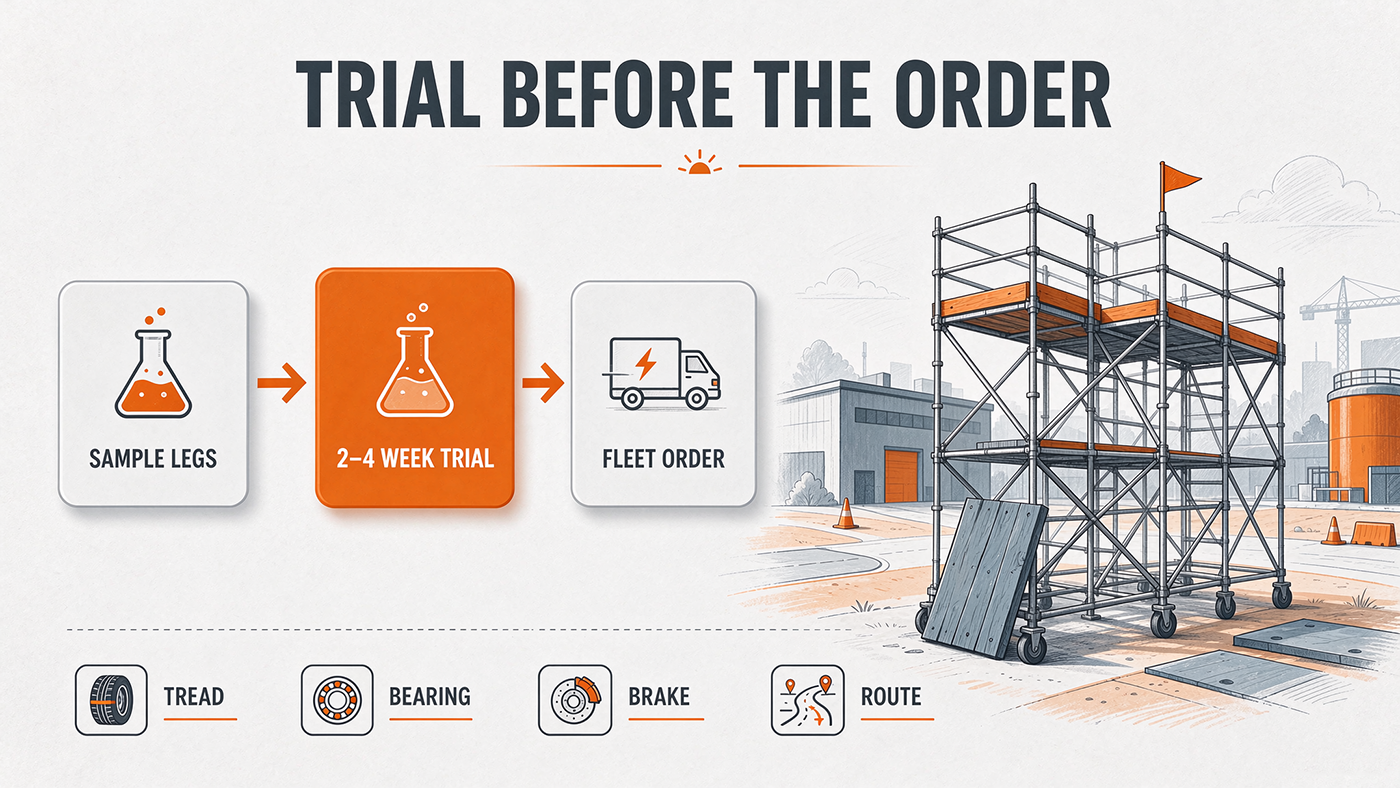
How the Fleet Verified Before Reordering
Sample legs went onto one working unit before any fleet order. The truck ran the depot and site route for two to four weeks, and the maintenance team checked the tread for chips or flats, turned the wheels after rain to confirm the bearing still freed up, tested the brake on a slope, and noted any marking on the hard yard surface. Only after that trial did we quote the fleet quantity with spare pairs kept for swap-out.
If your existing brackets are still straight and the plate holes line up, the frame does not need replacing. On this kind of program the change can be limited to the wheel assembly; we say so on the quote rather than upselling a full rig.
What Buyers in the Same Position Should Check First
- Weigh the loaded scaffold or platform truck, divide by four, then add margin for the worst corner before reading any per-wheel rating.
- Walk the actual route and note the surface: compacted concrete, temporary steel plate, gravel, mud or kerb drops. The tread choice changes with that surface.
- Check whether the units park on a slope. A brake that only holds on flat ground is not enough for a rental machine left on site.
- Look at the bearing after a wet spell. A leg that drags once it has stood outdoors has a seal or bore problem, not a tread problem.
- Photograph the current mounting — plate size, hole spacing, bore or stem. A fitting match decides whether a bracket change is needed at all.
When This Upgrade Is Not Worth It
If your scaffold and platform trucks run on smooth indoor concrete, carry light loads, and the wheels have lasted without chipping, do not step up to an outdoor heavy-duty leg. A hard tread on a dry, smooth floor adds push force and cost for ground conditions the machine never meets. The upgrade above was worth it because the ground was rough, the machines sat outdoors, and the wheels were failing inside the rental cycle. Match the fix to the actual duty.
Standards and Reference Practice
Industrial casters and wheels are specified against ISO 22883 (current edition), which sets requirements and tests for manually pushed or towed wheels and legs, and the ANSI/ICWM terminology standards define the names and test practices the industry uses. These are reference standards for sizing and testing; they are not a claim that any one leg carries a certified rating beyond its own spec sheet.
How Globe Caster Supports Rental and Construction Programs
Foshan Global Caster Co., Ltd, Guangdong, China has manufactured casters and wheels since 1988. The plant covers about 156,000 m² with 500-plus staff and in-house stamping, injection moulding and PU pouring, outputting roughly ten million casters a year. The catalogue holds 21,000-plus models, 600-plus of them as standing stock, certified to ISO 9001 and ISO 14001, with over 100 patents. For rental and construction programs we send sample legs first, keep mixed swivel, rigid and brake fittings in one shipment, label cartons to your reference, and cover a one-year warranty under normal use. Typical lead time is about 30 days.
Send Us the Route and the Load, Not Just the Wheel Size
Tell us the loaded weight of the scaffold or platform truck, the yard surface, the worst obstacle on the route, whether units park on a slope, and what the old wheels are doing (chipping, dragging, losing brake grip). We reply with the tread, bearing, diameter and bracket class we would spec, plus sample legs to trial on one machine. If a standard indoor leg still covers the job, we say so.
Post time: Nov-21-2026